
Western Start, Vietnamese Heart: A Viet Kieu Returning And Documenting Her Road Home

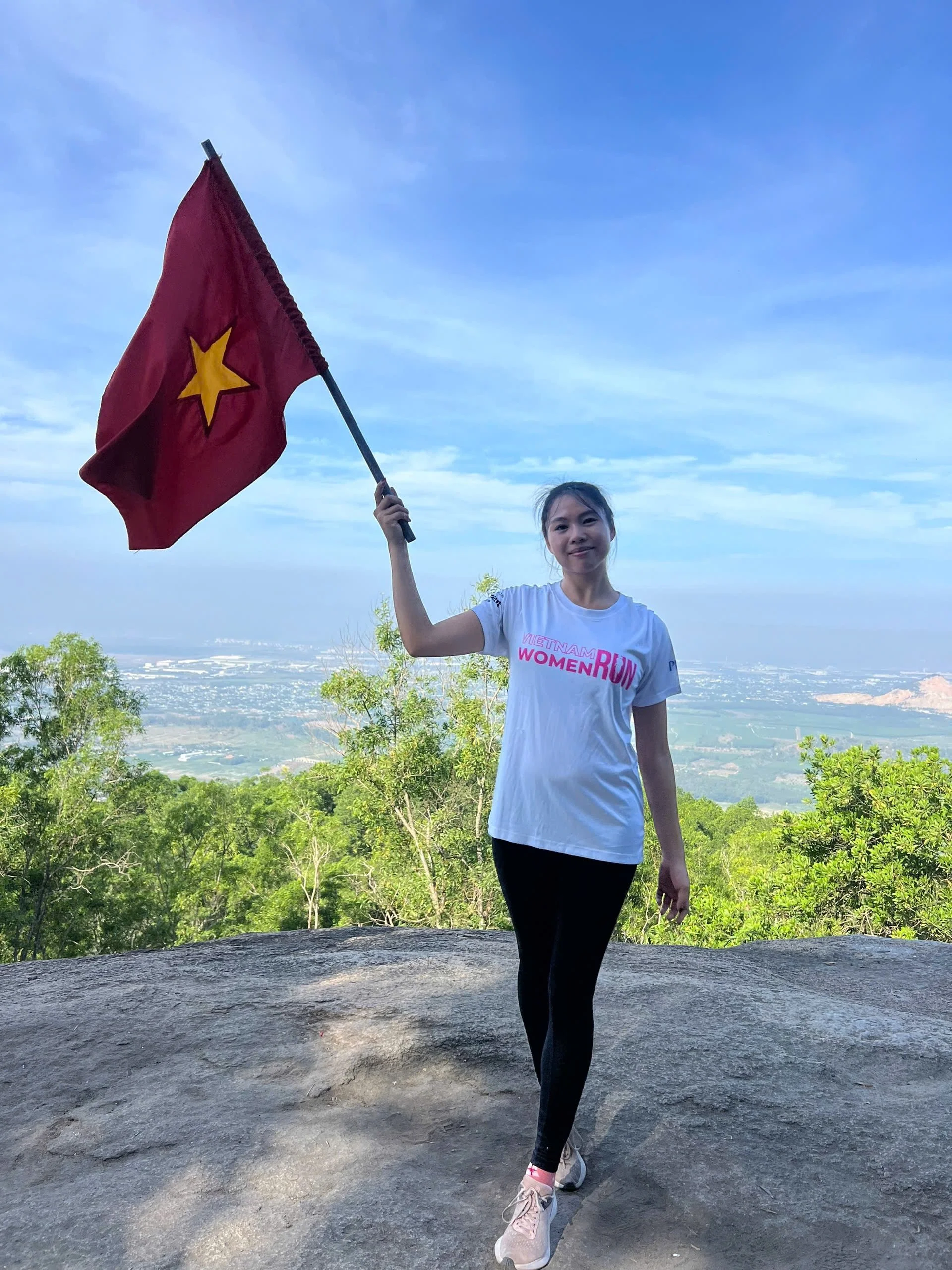
Throughout this article, ComebaCK: What’s Your Story focuses on Nguyen Thuy Trang, a German-Vietnamese storyteller talking about documenting her return home to Vietnam, settling in Saigon, what makes the city a dream “home,” and why there is beauty in authenticity and imperfection, especially whilst creating content.
Western start, Vietnamese heart. That’s the story of Nguyen Thuy Trang.
She grew up in a quiet corner of Germany before later experiencing the bigger rhythms of cities like Stuttgart and Munich for her studies. On paper, her life was European from the beginning. Yet inside the home, things were different. The values and structures she was exposed to were unmistakably Vietnamese.
Her parents had arrived in Germany in 1987 as contract workers, part of a generation who left Vietnam in search of opportunity. Like many families in that position, they carried their culture with them.
Even as a child, Trang sensed that her upbringing wasn’t the same as that of her German classmates. While many of them enjoyed the freedoms of teenage and adolescent life—parties, spontaneous holidays, and more casual independence—Trang knew that those experiences wouldn’t necessarily be hers. She wouldn’t be allowed. Protective parenting was simply part of the culture she had grown up in. But those boundaries also gave her identity: a clear understanding of who she was. She always knew she had Vietnamese roots.
From the age of sixteen, she began visiting Vietnam regularly. These trips were about family and connection. The whole family would shut their shop in Germany and head back to the motherland. She visited villages and countryside areas in North Vietnam, sensing a life that was far removed from the structured order of Germany. People worked hard and resources weren’t always plentiful. Yet what struck her most wasn’t hardship—it was the way people supported each other. Community was everywhere.
When asked how people managed with so little, the answer was simple: they helped one another. Families shared meals and cooked for her, welcoming them into their houses. That spirit stayed with her. Everybody was outside. They interacted with the neighbors. All of these practices are normal in Vietnam, yet increasingly alien in the West.
One of Trang’s most interesting reflections is about the idea of freedom. In many Western minds, freedom is naturally associated with Europe or North America. Countries like Germany are often seen as the benchmark for liberty, efficiency, and structure. Vietnam, by contrast, is sometimes viewed from the outside as restrictive or controlled.
Trang sees it differently. In many ways, Vietnam feels more free. An example could be locals often wearing pajamas on the road on a regular basis. This isn’t trivial; it symbolizes individuality and a belief to express oneself, rather than the western ideal of trying to “fit in,” and “be accepted.”
In Germany, social life can feel rigid. Meeting friends often requires an appointment-style method, arranging schedules weeks in advance. Yet in Vietnam, things unfold naturally. People gather without overthinking the logistics. There’s a sense that life flows forward rather than being tightly scheduled.
Vietnam simply gets things done. That spirit appears everywhere, from the way people navigate busy intersections on motorbikes to the countless entrepreneurs building businesses from the pavement—serving noodles, coffee, or snacks from small roadside stalls. There’s a quiet determination to make things work, regardless of obstacles. It’s an energy that spreads quickly to those around it.
Ironically, during our podcast recording, fireworks suddenly erupted nearby, interrupting the audio and flooding the microphones with noise. In another environment, the recording might have stopped and we might have been flustered. Instead, when in Vietnam, we simply kept going. It felt oddly fitting. Vietnam doesn’t pause for perfect conditions. It moves forward anyway.
Trang recalled another story about a friend who had booked a boat tour that didn’t go entirely according to plan. In Germany, she joked, the tour might have been cancelled for safety or scheduling reasons. In Vietnam, the boat simply continued. They found a way to fix it. They always seem to.
There’s a resilience that grows from living with fewer “riches.” When things aren’t always certain, people adapt. Creativity and perseverance take the lead. That spirit becomes part of the culture itself.
The warmth of daily life also stood out to Trang during her visits. Vietnam feels deeply family-oriented, and much of that life takes place outdoors. Perhaps it’s the climate, or perhaps it’s simply tradition, but people spend far more time together in public spaces.
You see it in the evenings: families gathered around small tables on the pavement, neighbours chatting over coffee, groups of friends sharing food and laughter on plastic stools under streetlights. This can go on into the early hours; where the West shuts down. Early morning, while other nations trudge out of slumber, Vietnam rise to attack their day.
Meals are shared. Life is lived collectively rather than individually. There’s a deep awareness of the role that their ancestors played in allowing them to live the way they do now, reflected through the family-friendly society. Human’s most important currency is shared amongst Vietnamese families too: the currency of time.
Trang’s first real experience of Vietnam’s bustling city life came in 2019. Up to that point, most of her visits had focused on rural areas and fostering family connections. But when she arrived in Ho Chi Minh City, she encountered a completely different side of the country. Vietnam was far more developed than she had imagined. Somewhere during that trip, a thought began to grow in her mind.
What if she lived here?
That thought lingered until 2024, when, after finishing her degree and contemplating her professional life, Trang decided she wanted to become fluent in the Vietnamese language. And she knew the best way to do that wasn’t through a learning app; it was cultural immersion. So she secured a marketing role and moved to Saigon, Vietnam.
The honeymoon phase arrived quickly. The city opened up in ways she hadn’t experienced before. She explored hobbies, tried new activities, and met people from all walks of life. Pickleball games, running groups, dance classes —all of it became part of the rhythm of her new life.
What struck her most was the abundance of opportunity. In Germany, she sometimes felt she had to search for things to do or communities to join. In Vietnam, they seemed to appear everywhere—to the point where you had to turn opportunities down due to the number of options, rather than the contrary.
There was a sense that the country itself was moving forward, and living there meant moving with it. For Trang, Vietnam represents a place that is still growing into its future. Countries like Germany, Britain, and the United States have already experienced prosperous periods in recent decades. They’ve had their moment: The American Dream. Cool Britannia. But maybe they’ve had their time.
Vietnam might now have its own time. From being immersed within it over several years, it feels like a country firmly on the rise. And that rising energy influences the people living there. It pushes them to build, to try new things, to grow alongside the country itself. It’s difficult not to grow when you see so many opportunities around you.
Knowledge of what Vietnam represents is something some Westerners wouldn’t be aware of. Places like Japan, China, and Thailand have awareness amongst Westerners, but Vietnam is still an underrated “gem” that can easily slip under the radar. Buildings and businesses are appearing in abundance; especially in Ho Chi Minh City, it’s a rapidly expanding metropolitan.
Despite embracing life in Vietnam, Trang doesn’t reject her Western background. Instead, she sees her identity as something blended and evolving. She understands her roots, respects her family history, and appreciates the culture she was raised in. At the same time, she believes identity ultimately belongs to the individual. Each person has the ability to shape it for themselves.
For Trang, that balance between German upbringing and Vietnamese heritage has become something powerful rather than conflicting.
One of the ways she expresses that identity is through documentation. On social media—particularly Instagram and YouTube —she shares small moments from everyday life through her channel, “Tay Tales.”
The content isn’t polished or carefully staged. In fact, that’s the entire point. Her posts capture reality as it is: ordinary scenes, spontaneous moments, fragments of daily life that might otherwise disappear unnoticed. She believes there’s beauty in imperfection, and that authenticity matters more than aesthetic perfection.
Some people argue that filming or photographing moments prevents you from fully experiencing them. Trang doesn’t agree. She believes you can live the moment and record it at the same time. Capturing memories doesn’t diminish them—it preserves them. Just like you can be both German and Vietnamese, you can capture a moment in time and stay present.
Her very first recorded video remains one of her favourites, precisely because it’s imperfect. It’s raw and unfiltered, a snapshot of a moment that will never exist again, which does that specific moment justice. Every video she creates becomes a small time capsule, something to be reflected upon with pride as the years develop.
For Trang, the essence of a country ultimately comes from its people. Vietnam’s energy isn’t just created by locals, but also by the many expats who arrive and contribute their own stories and perspectives. Together, they form something vibrant and unique. When asked where she believes Vietnam is heading and why it has become such a popular hub for those moving here, her answer is simple.
“It’s a home.”
Even for those who travel widely, Vietnam often becomes the place they return to. Few countries offer the same variety within a single place: beaches, mountains, countryside retreats, ample party places, an unrelenting city life, and cultural heritage spots. Its versatility makes it compelling. It’s why many people choose to travel to other places like Thailand and Malaysia, but find roots here in Vietnam. To illustrate, the author of this article visited eleven Asian countries across six months in search of home. He returned to Saigon. It called him back. That’s what home does.
Her story mirrors the experience of many Viet Kieu/Vietnamese overseas—those who grew up abroad but eventually feel the pull of their ancestral homeland. In Trang’s case, that journey has brought her full circle. The future can never be guaranteed for any of us. But currently, Vietnam feels like the place where she belongs. Her Western start and Vietnamese heart are currently very much aligned.
Links to Trang’s TayTay channels;